
Wash N Go Express Car Wash: The 4-Minute Secret to Showroom-Quality Results
January 6, 2026If you have ever pulled out of a car wash and noticed a streak of mud still clinging to your bumper or road grime baked onto your rocker panels, you already know that not all drive in car washes deliver the same result. The machine itself often gets the credit or the blame, but the real difference between a car that comes out spotless and one that comes out halfway clean usually happens before you even enter the tunnel.
It starts with pre-spray, and most people have no idea how much it matters.
What Pre-Spray Actually Does (And Why Most People Ignore It)
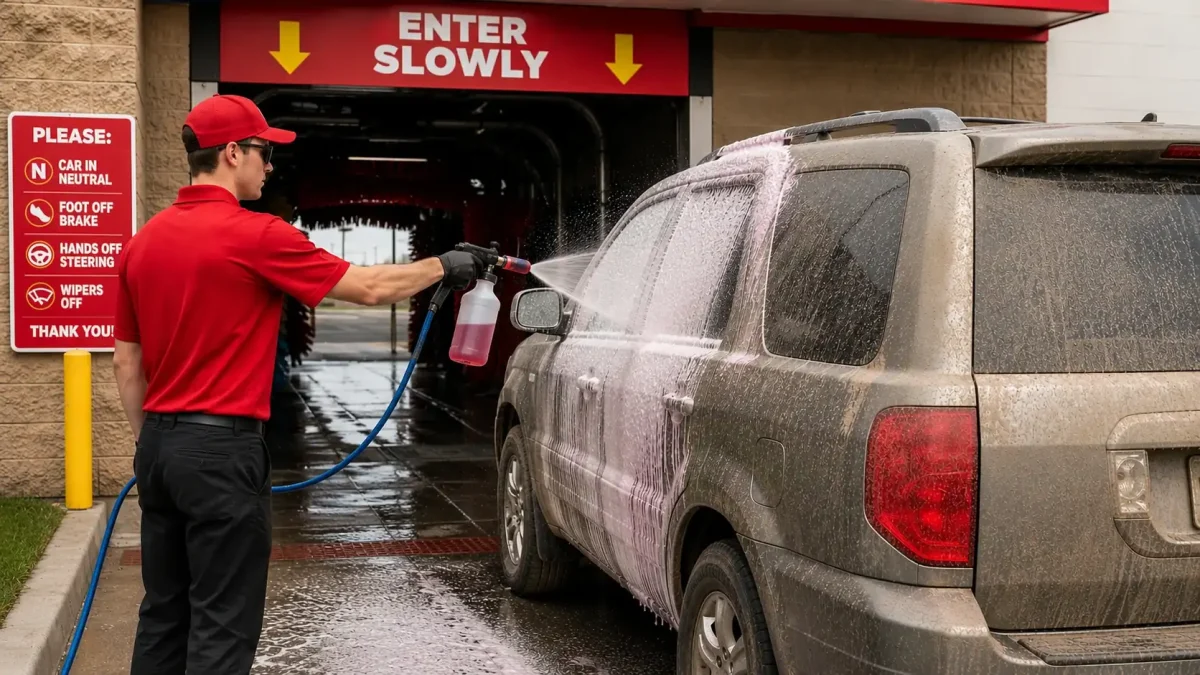
Pre-spray is a chemical solution applied to your vehicle before it enters the automated wash tunnel. Its job is to break down the bond between tough contaminants and your paint surface. Think of road grime, bug splatter, bird droppings, tree sap, and brake dust as things that do not just sit on top of your car. They bond to the surface, especially when heat and UV exposure have had time to bake them in.
Water pressure alone cannot always break that bond. Neither can the spinning cloth in the tunnel if the dirt has not been loosened first.
When pre-spray is applied correctly, it starts a chemical reaction that softens those bonded contaminants and lifts them away from the surface. By the time your car reaches the cloth or the high-pressure jets inside the tunnel, the dirt is already compromised. The wash does not have to work as hard, and the results are dramatically better.
This is the step that separates a truly effective drive in car wash from one that just gets your car wet and sends you on your way.
Why Some Drive In Car Washes Skip It or Rush It
Here is the uncomfortable truth: pre-spray costs money, takes time, and requires trained staff to apply it properly. In a high-volume car wash operation where the goal is to move as many cars through the tunnel as possible, pre-spray is often the first thing to get cut short.
Some drive in car wash locations use automated pre-soak arches at the beginning of the tunnel. These spray a general detergent solution over the entire vehicle as it moves through. That is better than nothing, but it is not the same as a trained attendant targeting the actual problem areas on your specific vehicle.
Your front bumper after a highway drive has bugs embedded in it. Your lower door panels carry road spray packed with salt and road debris. Your wheel wells may have compacted mud. A spray arch treats everything the same. A skilled attendant targets what actually needs attention.
When you drive through a wash that rushes the pre-spray or skips it entirely, you are essentially asking the tunnel equipment to do 100% of the work when it was only designed to do about 70% of it. The remaining 30% was supposed to be handled before you got there.
The Chemistry Behind Loosening Tough Road Dirt
You do not need a chemistry degree to understand why pre-spray works, but knowing the basics helps explain why the dwell time matters just as much as the application.
Pre-spray solutions are typically alkaline-based. Alkaline cleaners are effective against organic matter like bug guts, bird droppings, and general road grime because they break down proteins and fatty compounds. Some car washes also use a two-step process where a low-pH acid pre-soak handles mineral deposits and brake dust, followed by an alkaline solution for the organic debris.
After the solution is applied, it needs time to sit on the surface and do its work. This is called dwell time. Rushing a vehicle into the tunnel 15 seconds after pre-spray does not give the chemistry enough time to work. A good car wash operation gives the pre-spray enough time to penetrate and loosen before the vehicle moves forward.
At Richie’s Car Wash in Parker, the pre-spray and prep step is built into the process, not treated as optional. The team pre-sprays each vehicle and ensures it is properly prepared before it enters the tunnel. That extra step is a big reason why results here consistently outperform what you get at washes that skip it.
What Happens Inside the Tunnel Without Proper Pre-Spray
Picture this: you pull into a drive in car wash that does not pre-spray. Your car has road grime on the lower panels, bug splatter across the front, and salt residue from last week baked onto the paint.
The tunnel starts with a high-pressure rinse. Some of the loose surface dirt washes off. Then the cloth wraps hit your car and begin scrubbing. Here is where the problem starts. The cloth is not a magic eraser. It can scrub off loose contamination effectively, but when it hits bonded grime, it has two options: push the dirt around or abrade it. Neither is ideal.
When cloth comes into contact with hard particles of dirt or road debris that have not been chemically loosened, those particles can act like sandpaper between the cloth and your paint. Over time, this is how swirl marks and micro-scratches develop. The irony is that a car wash that skips pre-spray in the name of speed may actually be causing gradual paint damage that you do not notice until the scratches show up under sunlight at a certain angle.
With proper pre-spray applied before tunnel entry, the cloth encounters contamination that has already been loosened and lifted. It moves across the paint more freely, cleans more completely, and puts less mechanical stress on the surface.
Colorado-Specific Dirt: Why Pre-Spray Matters Even More Here
Parker and the surrounding areas along the Front Range give vehicles a serious workout. If you are driving in Douglas County or commuting through the Denver metro, your car is dealing with a combination of contaminants that would challenge any car wash.
Winter road treatment in Colorado means magnesium chloride, not just road salt. Mag chloride is a liquid deicer sprayed directly onto roads before storms, and it is notorious for how aggressively it sticks to the undercarriage, lower panels, and wheel wells of vehicles. It does not rinse off easily because it was designed to bond to road surfaces. When it bonds to your car instead, it creates a corrosive film that eats at painted surfaces and metal components over time.
Spring and summer bring their own problems. Cottonwood season coats everything in a sticky film that traps dirt underneath it. Mountain drives load up front bumpers with insects. Gravel roads kick up mud and debris that pack into every gap and crevice.
A drive in car wash that does not address these contaminants at the pre-spray stage is not equipped to handle what Colorado drivers actually deal with. General tunnel pressure can remove loose debris, but mag chloride residue, compacted cottonwood, and baked-on bug matter need chemical intervention before the wash begins.
This is why the right express car wash for a Colorado vehicle is one that takes pre-treatment seriously, not one that just runs the same automated cycle it would run on a car that has been sitting in a garage for two weeks.
What to Look For When Choosing a Drive In Car Wash
If you want a car wash that actually removes the tough stuff, here is what to pay attention to before you pull in.
Staff presence at the entry point. If there is no one outside greeting your car before it enters, chances are there is no manual pre-spray happening. A drive-in car wash that takes pre-spray seriously staffs the entry lane.
A clearly explained pre-spray step. A good car wash operation is not shy about telling you what they do before your car enters the tunnel. If the wash process is explained to you at entry and pre-spray is part of that explanation, that is a good sign.
Targeted application, not just a single spray. Watch how the pre-spray is applied. Is it a general mist over the hood, or is the attendant targeting the front bumper, the lower panels, the wheel arches? Targeted application means someone is actually looking at your car and treating what needs treatment.
Equipment condition. A car wash that invests in proper pre-spray also tends to invest in maintaining its equipment overall. Clean facilities, well-maintained cloth media, and functioning dryer systems are signs that the operation cares about the outcome, not just the throughput.
A same-day re-wash guarantee. A car wash that offers to re-wash your vehicle the same day if the result is not satisfactory is backing up its process with accountability. Richie’s Car Wash in Parker offers exactly that, because they are confident in the process they run.
The 4-Minute Result That Pre-Spray Makes Possible
Richie’s Car Wash has been operating in Parker since 2005, and one of the things that has kept customers coming back for twenty years is the consistency of the result. The wash takes about four minutes from tunnel entry to exit. Getting a clean car in four minutes sounds like it would require cutting corners somewhere, but the opposite is true when the prep work happens before the clock starts.
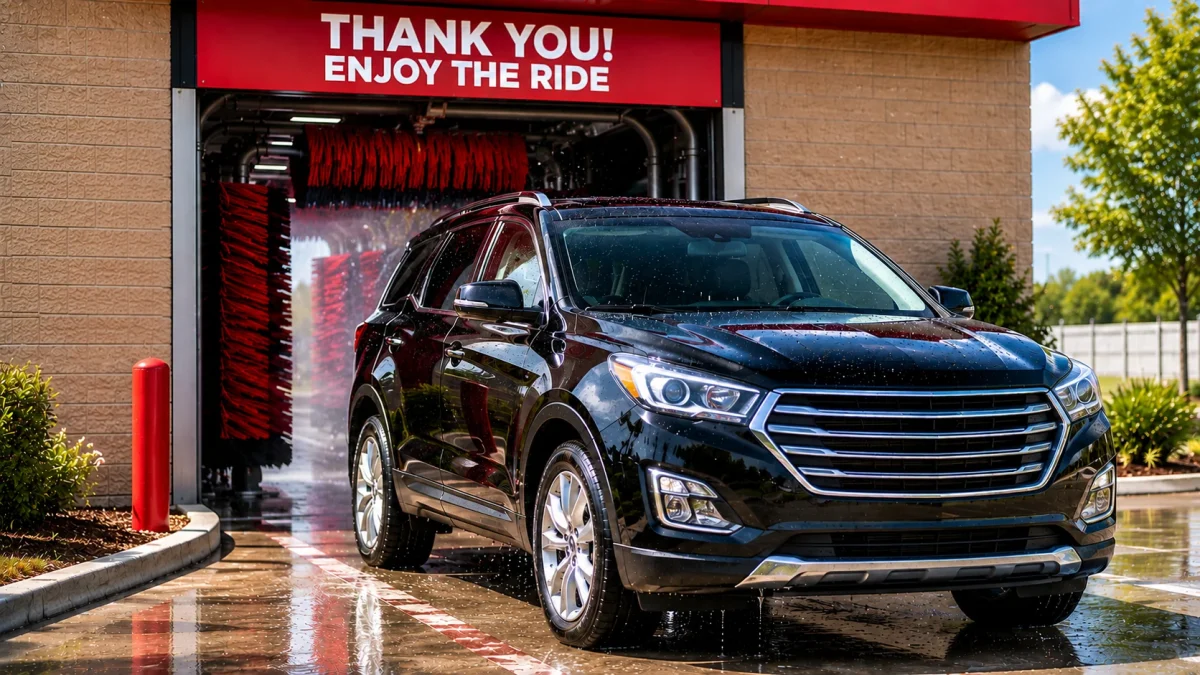
When a vehicle is properly pre-sprayed and chemically prepped before entering the tunnel, the automated wash can operate efficiently and still deliver a thorough result. The cloth does not have to make multiple passes to break through grime it should not have to fight. The rinse cycle clears contamination that has already been loosened. The dryers finish the job on a surface that is already clean.
The result is what Richie’s describes accurately: better than hand detailed, in a fraction of the time, at a fraction of the cost. Pre-spray is not a luxury step. It is what makes the math work.
If you are in Parker or the surrounding Douglas County area and want a drive in car wash that actually handles what Colorado roads throw at your vehicle, explore our single wash plans or unlimited wash membership options to find the plan that fits how often you drive. Or call us directly at (303) 840-1696 and we will walk you through what your vehicle needs. Your car has been putting up with Colorado roads. It deserves a wash that actually shows up for the job.


